
Now this, bhikkhus, is the noble truth of suffering: birth is suffering, aging is suffering, illness is suffering, death is suffering; union with what is displeasing is suffering; separation from what is pleasing is suffering; not to get what one wants is suffering…
— Attributed to the Buddha
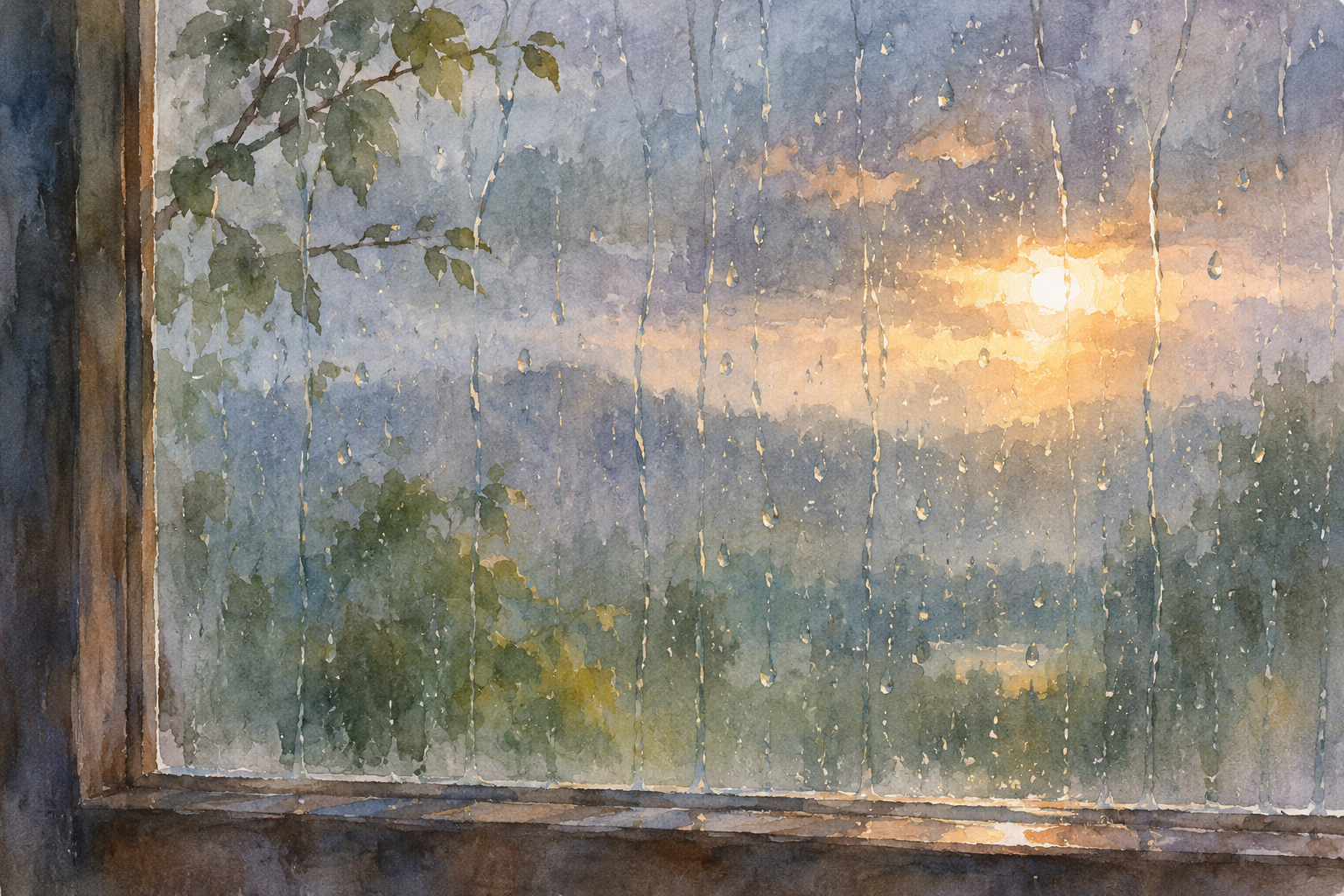
In the story of the Buddha's first teaching after awakening, we encounter a diagnosis of a problem. Before describing a cure, the story describes the disease. It uses the word duḥkha. Often we translate this as "suffering." But that doesn't capture the full range of its meaning. Duḥkha encompasses sorrow, dissatisfaction, imperfection, and the uneasiness of living in a world where everything changes. It is a word with many shades of meaning, none of which can be fully captured in a single translation. Sometimes a word calls up more than its definition. Think of the word "lavender." It suggests more than just a color. It suggests a flower, a smell, and a feeling. So it is with duḥkha. It points toward something we can recognize in our own experience. Life is imperfect. Things change. Nothing is as permanent as we would like. And there is suffering. The first noble truth invites us to look at this undercurrent of existence, not as an idea to believe, but as something to discover for ourselves.
In the sutra, the teaching lists a range of things associated with duḥkha: birth, aging, illness, and death. These are part of the process of living, and each brings us face to face with change, loss, and impermanence. But there are more subtle forms of duḥkha: being around things we don't like, being separated from things we do like, and failing to get what we want. Much of our energy goes into trying to shape our lives so we always have around us what we like, never what we don't, and always what we want. But this is a fool's errand. Circumstances change. People move on. Our bodies age. And even when we get something, it seldom turns out as we hoped. Often we hear this as a negative view of life. But that would miss the point of the story. It isn't asking us to conclude that life is bad. It is inviting us to look at something most of us would rather avoid. We distract ourselves from duḥkha, deny it through positive thinking, or lash out at it as though it were some cosmic wrong. None of these approaches confronts the reality. The first noble truth invites us to honestly face duḥkha in our own lives. In one sense, this is simply how the world is. Not how it ought to be, or how we would like it to be, but how it is.
This recognition is fundamental to the Buddhist stories. It isn't merely a starting point, something to acknowledge before moving on to more interesting teachings. It is the foundation upon which the rest depends. Without seeing it, we remain caught up in what the tradition calls ignorance. Not ignorance of facts, but of reality. Through this ignorance, we become entangled in the cycle of dissolving and becoming, loss and desire, disappointment and grasping. We go round and round, without even recognizing the wheel we're on.
One of the stories of Siddhārtha's youth revolves around two questions. Why is there suffering in the world? And is there a way beyond it? Whether such questions were ever asked by a historical Siddhārtha is beside the point. What matters is the question the story places before us. It isn't merely a philosophical puzzle. It's a question that, if taken seriously, could reshape our lives. The story of awakening connects duḥkha with craving and attachment, and describes a way toward release through the Eightfold Path. This doesn't mean becoming cold or indifferent to life. It means recognizing how our attachment to things as we want them to be becomes a source of suffering when conditions inevitably change.
And this brings us to something fundamental about Buddhist teachings. What has come down to us is a collection of stories, preserved and retold over many generations. We cannot know how faithfully they describe events that actually happened. But their value doesn't depend on historical certainty. The stories are not substitutes for our own understanding. They are invitations to discover something for ourselves, to see with our own eyes and hear with our own ears, rather than depend on someone else's account of reality. And perhaps that is what makes the first noble truth such a difficult invitation. Look at your own life. Look at your struggle to avoid change, to seek pleasure and avoid pain. Look at how much work it takes to maintain the illusion that we can permanently shape our circumstances. There is no need to wallow in misery or become sour about life. The invitation is simply to look, without turning away. To see what is actually there, rather than what we wish were there.
The story can point us in that direction. But the seeing is ours alone.
Adapted from Exploring Chán: History, Practice, Perspectives (Second Edition), Songlark Publishing.