
A human being is part of the whole called by us universe, a part limited in time and space. We experience ourselves, our thoughts and feelings, as something separate from the rest. A kind of optical delusion of consciousness. This delusion is a kind of prison for us, restricting us to our personal desires and to affection for a few persons nearest to us. Our task must be to free ourselves from the prison by widening our circle of compassion to embrace all living creatures and the whole of nature in its beauty. The true value of a human being is determined primarily by the measure and the sense in which they have obtained liberation from the self.
— Albert Einstein
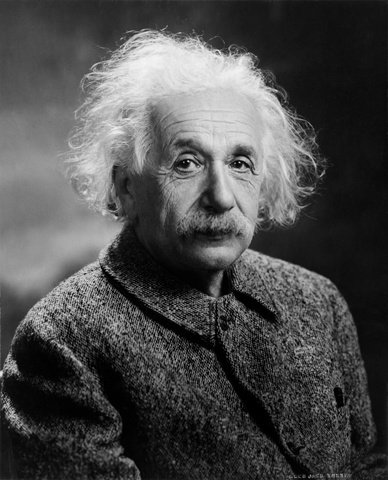
It's striking to find a physicist arriving at the same insight that contemplatives have pointed toward for millennia. Einstein calls it an "optical delusion of consciousness"—this sense we carry of being separate, bounded, cut off from everything else. In Chan, we might call it the ego's construction of reality, a kind of bubble we inhabit without knowing we're inside it. The terminology differs, but the diagnosis is the same: we mistake a mental fabrication for the way things actually are, and this mistake becomes our prison.
What interests me about Einstein's formulation is that he doesn't treat this as a philosophical curiosity. He calls it a task—something we must work to overcome. This aligns with my own experience. The delusion doesn't dissolve simply because we recognize it intellectually. Knowing we're in a prison isn't the same as walking out the door. The walls are made of something more stubborn than ideas: they're made of habits, reactions, the accumulated momentum of a lifetime spent reinforcing the sense of a separate self.
Consider how we come to feel like a "self" in the first place. We gather sensations—sight, sound, touch, taste, smell—and weave them together with memory and interpretation. Over time, this weaving becomes so seamless that we forget it's happening. We conclude: this is me. We learn to judge and evaluate, to form preferences and aversions, to love certain people and remain indifferent to others. The bubble thickens. And the thicker it becomes, the more isolated we feel, the more we suffer the particular loneliness of being trapped inside our own heads.
Einstein's prescription—widening our circle of compassion—is one way out. But there's something prior to compassion that makes genuine compassion possible: seeing through the delusion itself. When we recognize that the boundary between self and other is a construction rather than a fact, compassion arises naturally. We don't have to manufacture it. The barriers simply become less solid, more transparent, until eventually they're recognized as having been imaginary all along.
This is what Chan practice aims at—not belief in some doctrine about interconnection, but direct perception of it. The difference matters. I can tell you that your sense of separateness is an illusion, and you might nod in agreement. But agreement isn't liberation. Liberation comes only when the prison walls become visible for what they are, and that requires a different kind of seeing than the intellect alone can provide.
Einstein ends by suggesting that our worth as human beings hinges on the degree to which we've freed ourselves from the self. This is a radical claim from anyone, let alone one of history's great scientific minds. It reframes the entire question of what a life is for. Not accumulation. Not achievement. Not even happiness in the ordinary sense. But liberation—the dissolution of a boundary that was never really there.